
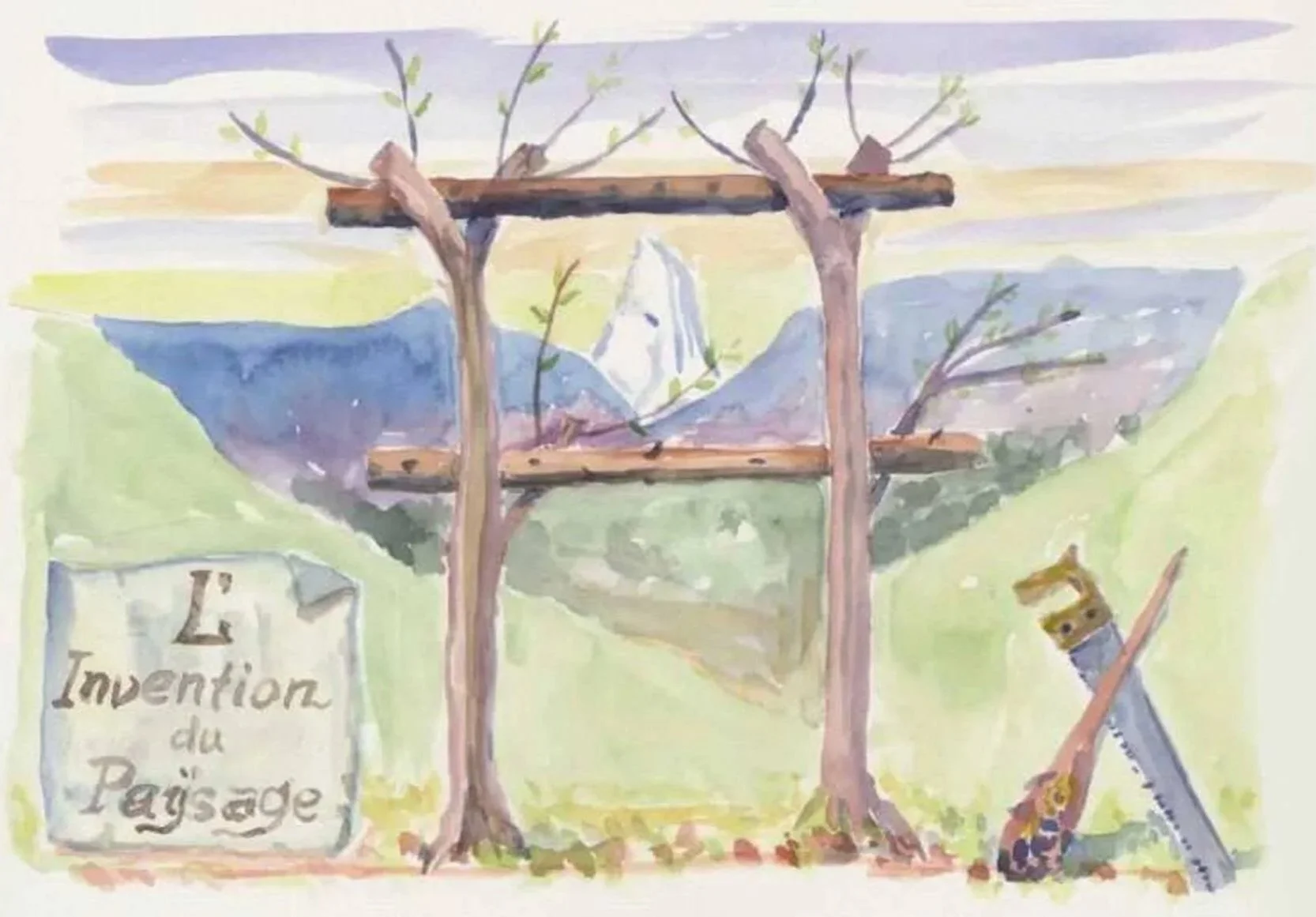
Lucius Burckhardt: Die Erfindung der Landschaft. Landschaftstheoretisches Aquarell
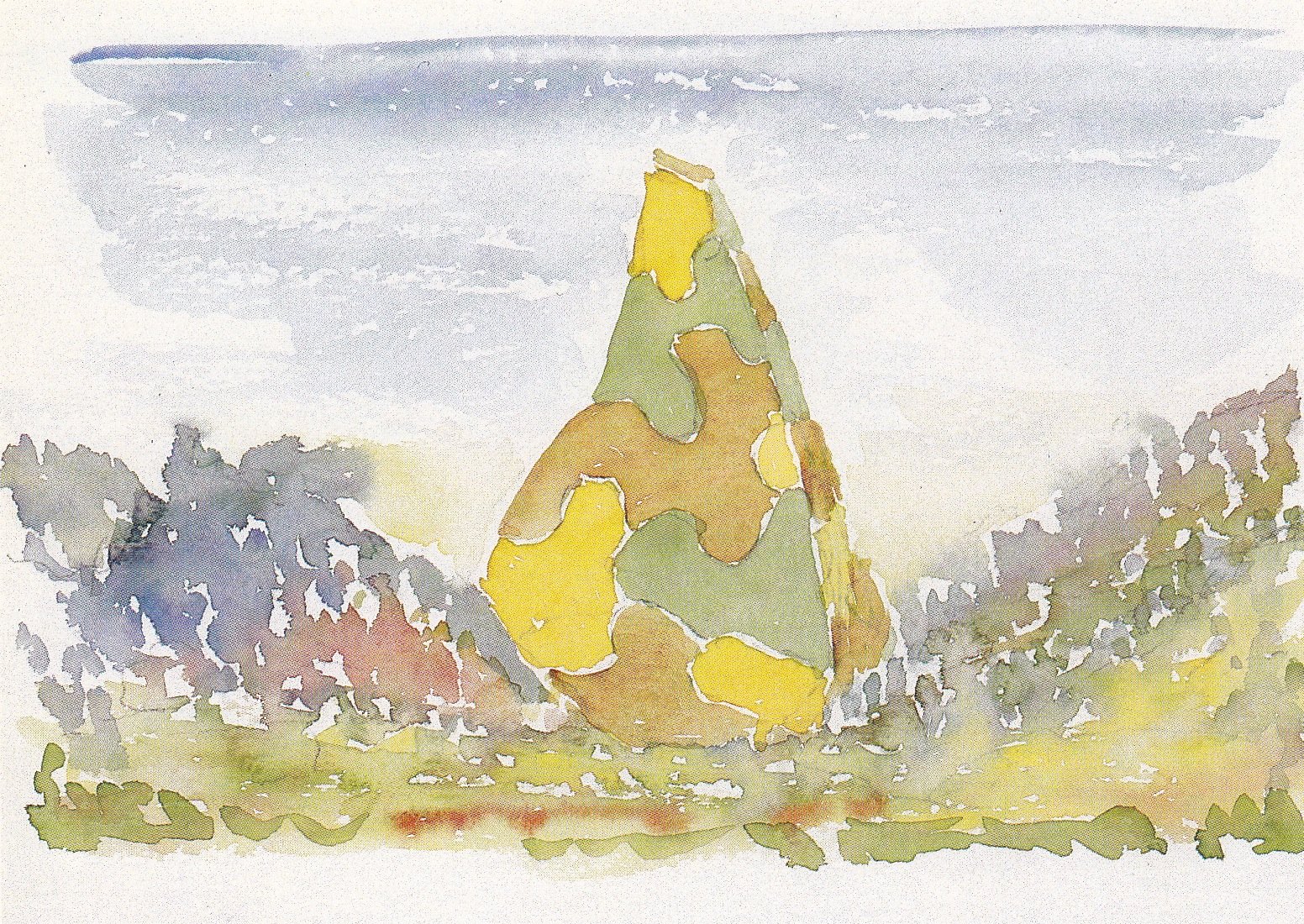
Lucius Burckhardt: Das unsichtbare Matterhorn. Landschaftstheoretisches Aquarell
Dissertation: Only Where Man Has Disturbed Nature, the Landscape Becomes Really Beautiful. The Landscapetheoretical Watercolors of Lucius Burckhardt
My dissertation examines the landscape-theoretical watercolours of Lucius Burckhardt and their relationship to questions of perception, representation and cultural construction. Burckhardt’s work forms an important point of departure for my ongoing interest in landscape not as a neutral background, but as a complex network of social, ecological and political relations.
Focusing on his watercolours and theoretical writings, the research explores how landscapes are shaped through processes of observation, planning, language and cultural imagination. Particular attention is given to the relationship between image and environment, surface and interpretation, as well as to the ways visual representations influence our understanding of nature and space.
The dissertation moves between art history, landscape theory and artistic research. It investigates how Burckhardt’s concept of “Spaziergangswissenschaft” (strollology) opens alternative ways of perceiving landscapes through movement, attention and subjective experience.
Many of the questions addressed in this research continue to influence my artistic practice today: the relationship between landscape and image, the visibility of hidden structures, the role of observation, and the idea of landscape as a dynamic and culturally produced system rather than a fixed scenery.
The dissertation therefore not only functions as an academic study, but also as an ongoing foundation for my artistic work and research.
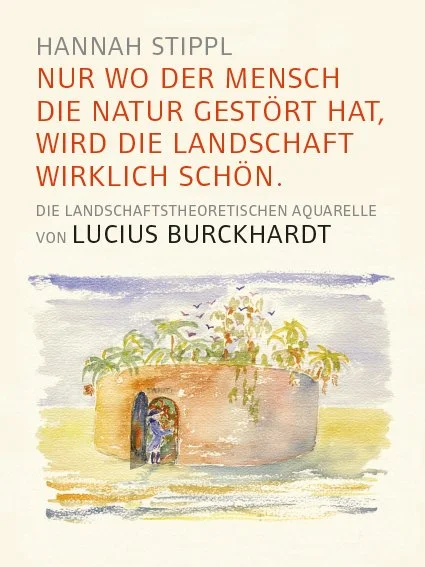
Dissertation: Nur wo der Mensch die Natur gestört hat, wird die Landschaft wirklich schön. Die landschaftstheoretischen Aquarelle von Lucius Burckhardt
Meine Dissertation beschäftigt sich mit den landschaftstheoretischen Aquarellen von Lucius Burckhardt und deren Verbindung zu Fragen von Wahrnehmung, Darstellung und kultureller Konstruktion von Landschaft. Ausgangspunkt der Forschung ist die Vorstellung von Landschaft nicht als neutralem Hintergrund, sondern als komplexem Geflecht gesellschaftlicher, ökologischer und politischer Beziehungen.
Im Zentrum stehen Burckhardts Aquarelle und theoretische Texte sowie seine Überlegungen zur „Spaziergangswissenschaft“, die Landschaft als Ergebnis von Aufmerksamkeit, Bewegung und subjektiver Wahrnehmung versteht. Die Arbeit untersucht, wie Bilder, Sprache und kulturelle Vorstellungen unsere Sicht auf Natur und Raum prägen und beeinflussen.
Die Dissertation bewegt sich zwischen Kunstgeschichte, Landschaftstheorie und künstlerischer Forschung. Viele der darin behandelten Fragen wirken bis heute in meine künstlerische Praxis hinein — insbesondere das Verhältnis von Landschaft und Bild, die Sichtbarkeit verborgener Strukturen sowie die Idee von Landschaft als dynamischem und kulturell produziertem System.
Die Forschung bildet damit nicht nur eine wissenschaftliche Arbeit, sondern auch eine wichtige Grundlage für meine künstlerische Praxis und meine laufenden Rechercheprozesse.